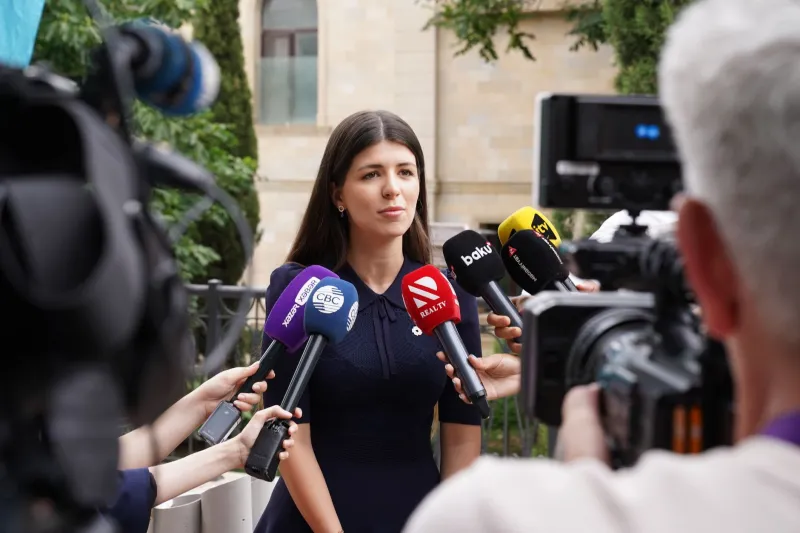
The Depth Behind the Voice: Building a Spokesperson Bench for 2026

Public communication is often treated as a personal skill. A chief executive is sent to media training, a director learns to handle the tough question, and the organisation quietly assumes that the matter is solved. It is not. A trained individual is an asset; a trained bench is a capability. In 2026, with scrutiny moving faster than most approval cycles, the difference matters.
The risk of a single point of speech
When one person becomes the established voice of an organisation, every interview, statement and conference appearance begins to depend on that person's diary, health, judgement and proximity to the issue. That is an operational weakness disguised as seniority. If the leader is on leave, the organisation delays. If the leader is too close to a difficult decision, the organisation sounds defensive. If the leader is simply not the right voice for a regional radio audience or a technical trade title, the organisation sends the wrong signal and then wonders why the message did not land.
The answer is not to dilute authority. It is to build depth behind it. A spokesperson bench allows an organisation to speak with one message through more than one credible voice. It protects continuity, reduces fatigue and gives communications teams a practical way to match the messenger to the moment.
Begin with themes, not job titles
A common mistake is to nominate spokespeople by seniority alone. The better starting point is the organisation's recurring public themes. Most UK organisations have a predictable set: financial performance, service delivery, safety and operations, regulation and compliance, workforce matters, innovation, and community impact. For each theme, identify a primary spokesperson and a secondary spokesperson who can speak with equal authority when required.
This is the two-deep principle. It does not mean that every theme needs a cast of dozens. It means that no important theme should rest on one name. The secondary spokesperson should be genuinely credible, not merely available. They should understand the subject, know the limits of their authority and be comfortable saying that a colleague will follow up on a detail rather than inventing an answer under pressure.
Credibility is earned in the rehearsal room
A name on a rota is not a spokesperson. Credibility comes from practice. That practice should be specific to the themes the person will handle, the audiences they will meet and the questions they are likely to face. Generic presentation training has its place, but it is not a substitute for scenario rehearsal.
Each theme should have a simple message house: the core point, two or three supporting facts, the likely challenge and the agreed boundary. Spokespeople should rehearse the opening answer, the bridge back to the main message and the graceful deferral when a question sits outside their remit. They should also rehearse silence. A spokesperson who can pause, listen and answer the question actually asked will always outperform one who has memorised a script.
At Clyde Communicators, we treat this as craft rather than performance. The aim is not to produce identical voices. It is to produce consistent judgement. A good bench sounds like one organisation because the facts, commitments and boundaries are shared, not because every sentence has been flattened into the same delivery.
Make the handover invisible
Organisations often train individuals but neglect the space between them. When the primary spokesperson is unavailable, the handover should be a protocol, not an apology. The secondary voice needs a concise brief: the current line, the known facts, the open questions, the commitments already made and the questions likely to arise. They also need to know who else is speaking and what has already been said publicly.
A one-page handover card is usually enough. It should record the theme, the approved language, the boundaries and the escalation route. The introduction should be natural. A simple formulation such as 'X is leading this area today' gives the audience confidence without suggesting that the usual voice has been sidelined. What undermines credibility is not a change of spokesperson. It is a change of facts, tone or commitment between spokespeople.
Match the voice to the audience
A bench also allows for audience fit. The chief executive may be right for a national broadcast interview, while a regional operations director may be far more convincing on local radio. A technical specialist may carry more credibility with a trade publication than a generalist leader. A Select Committee appearance may require a different combination of authority and detail from a customer-facing crisis briefing.
This is not about hierarchy. It is about fitness for purpose. The organisation should decide in advance which themes and audiences each spokesperson is equipped to handle, and which combinations should appear together. A bench without this clarity becomes a list of names; a bench with it becomes a communication plan.
Govern the bench like any other capability
A spokesperson bench needs maintenance. Review coverage quarterly, note where themes are thin, and refresh training annually or when a material issue changes. Track not only appearances but readiness: who has rehearsed recently, who has been tested on the current message and who has never handled a live challenge. Keep the bench visible to senior leadership so that it is treated as part of operational resilience rather than a communications side project.
A practical 90-day start is enough to create momentum. First, map the organisation's recurring public themes. Second, nominate a primary and secondary spokesperson for each. Third, run a short scenario session for every pair. Fourth, issue a one-page handover card. Fifth, test the bench in a low-stakes interview or internal simulation. Sixth, review what changed and schedule the next round.
The organisation that speaks well in 2026 will not be the one with the most polished single voice. It will be the one whose message holds when the voice changes. Build the bench before you need it, and the organisation will sound not merely prepared, but credible.