The First Minute and the Unknown Answer: A Communications Discipline for Technical Witnesses
Photo: User:Smillwee, CC BY-SA 3.0, via Wikimedia Commons
Public inquiries are often described as legal processes. They are also communication events. A hearing room asks an engineer, a clinician or a finance lead to do something unusual: explain complex work, in public, while being questioned by counsel, watched by affected communities and recorded for the public record. Legal preparation is essential, but it is not the whole of the task. The witness also needs a communications discipline.
As public inquiries continue to shape UK public life in 2026, organisations should treat expert evidence as a craft to be rehearsed, not simply a statement to be checked. The aim is not performance. It is clarity, accuracy and accountability in the same voice.
Legal preparation is necessary, but not sufficient
Solicitors and counsel will prepare a technical witness on the facts, the documents and the procedure. That work is indispensable. It reduces the risk of contradiction, protects the integrity of the evidence and ensures the witness understands the scope of the inquiry.
Yet a witness can be legally well prepared and still fail to be understood. Technical experts often default to the register of their profession: precise, qualified, dense and cautious. In a hearing room, that register can read as evasion. A panel may hear a careful answer and conclude that the witness is hiding behind process. The public may hear a long explanation and conclude that no one is accountable.
Communications coaching addresses a different question: how does a truthful expert make their evidence land? That is not about spin. It is about structure, plain language and the discipline of answering the question that has been asked.
The first minute sets the frame
Witnesses often spend weeks on the detail and minutes on the opening. That is a mistake. The first substantive answer frequently establishes how the panel, the room and the public will read everything that follows.
A useful discipline is to rehearse the first minute of evidence as a frame, not a script. The witness should be able to say, in plain terms, who they are, what their expertise covers, what they have been asked to address and where the limits of their evidence lie. For example: 'I am a structural engineer. My evidence concerns the design checks carried out between 2014 and 2017. I can speak to those checks and to the guidance in force at the time. I cannot speak to the commercial decisions taken by the client.'
That frame does three things. It establishes authority without boasting. It defines the boundary of expertise. And it gives the witness a place to return to when questioning drifts beyond their evidence.
Answer the question asked, then explain
Technical witnesses often over-answer. They hear a question, recognise the complexity behind it and deliver a lecture. Counsel may allow this; the public record rarely benefits from it.
A better pattern is direct answer, evidence, qualification. The witness should begin with the shortest true answer available: 'Yes.' 'No.' 'Not in my assessment.' 'That was outside my remit.' Then the evidence. Then any qualification that genuinely matters.
This structure protects accuracy because it forces the witness to separate the headline from the caveat. It also protects the listener. A panel that has heard the direct answer can follow the technical detail that follows. A panel that has heard two minutes of context is still waiting for the answer.
Rehearsal should include the bridge from technical detail to practical consequence. The witness should be able to say what a finding meant, not only how it was derived. 'The calculation was within tolerance. The practical effect was that the joint did not require further inspection at that stage.' That is the sentence the room will remember.
When the answer is 'I don't know'
Few phrases unsettle a technical expert more. They fear that an unknown answer will be read as incompetence. In practice, the opposite is often true. A witness who can distinguish between what they know, what they cannot recall and what falls outside their expertise is demonstrating discipline.
Coaching should give the witness a small set of honest phrases. 'That falls outside my expertise. My evidence is about the design process, not the contractual negotiations.' 'I do not have that detail to hand. I can provide a written note after the hearing.' 'I cannot recall that specific meeting, but the document records my advice at the time.'
Each phrase does the same work: it refuses to guess while keeping the witness engaged. What damages authority is not an unknown answer. It is a speculative answer that later unravels. The witness who says 'I don't know, and here is what I can tell you' is more credible than the witness who fills a gap with improvisation.
Accountability without performance
The hardest register for technical witnesses is accountability. Engineers, clinicians and finance leads are trained to describe systems, processes and collective decisions. Public inquiries want to know who decided, who advised and what was known. That does not require theatrical remorse. It requires the active voice.
A witness can say: 'I advised that the inspection interval remain unchanged.' 'I signed off the assessment on that date.' 'The decision rested with the board, and my role was to provide the technical recommendation.' These sentences are precise, human and accountable. They do not overclaim. They do not hide.
Coaching should include the emotional register as well as the factual one. A witness may need to hear their own evidence read back, or to practise answering a hostile question without becoming defensive. The aim is composure, not coldness. The room should feel that a person is speaking, not a procedure.
Rehearse the room, not just the statement
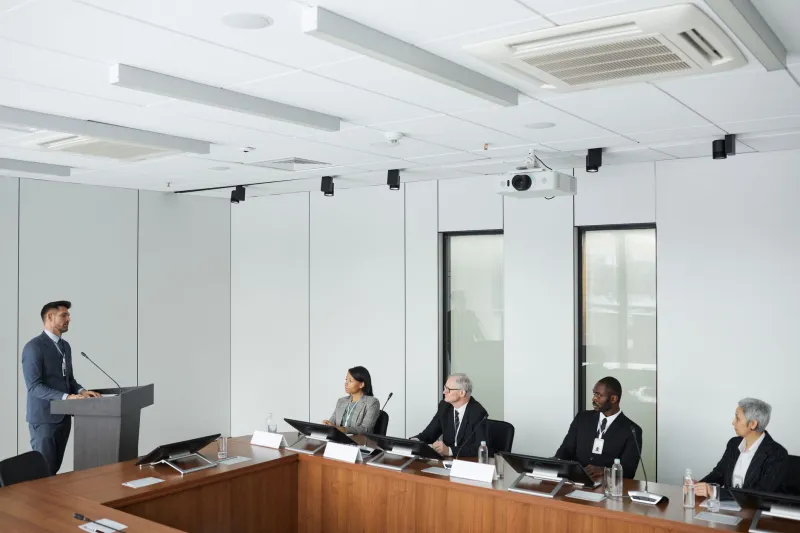
Mock hearings are most useful when they mirror the real conditions: the layout, the microphones, the panel, the timing and the interruptions. A communications coach can work alongside legal advisers, focusing on clarity, pace, jargon and the witness's physical presence. Recording the session is valuable. Most witnesses are surprised by how fast they speak and how much they assume.
The discipline is familiar from the shipyard: a handover works when the next person can act on it. Evidence works when the panel can understand it, test it and record it. Rehearsal should serve that standard, not the comfort of the witness.
After the hearing
A debrief matters. Which phrases worked? Where did the witness retreat into jargon? What questions exposed a gap in preparation? Those notes should feed back into the organisation's training, not simply into the next inquiry. Public evidence is a form of institutional learning, and the communications lessons are part of that record.
Technical experts do not need to become performers. They need to become clearer witnesses. The first minute, the direct answer, the honest unknown and the accountable sentence are small disciplines. Together, they give evidence the best chance of being heard as it was meant: accurate, human and responsible.