The Accountable Apology: A Leader’s Structure for Public Statements Under Scrutiny
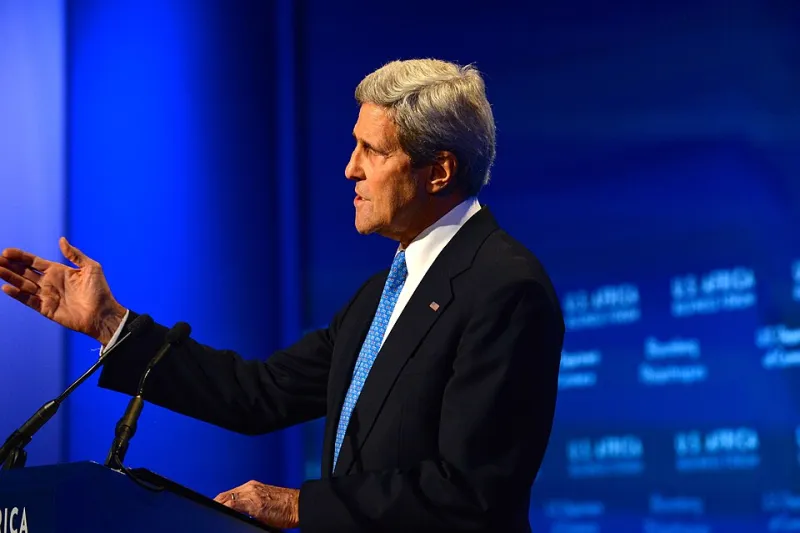
Photo: U.S. Department of State from United States, Public domain, via Wikimedia Commons
Public apologies often fail not because the words are unkind, but because they are built to protect the organisation rather than repair the relationship. In 2026, UK audiences are alert to hesitation, passive grammar and the faint sound of a legal team clearing its throat. A statement that lands does something simpler and harder: it accepts responsibility in language a reasonable person can understand.
The test is not whether the apology sounds polished. It is whether the people affected believe the organisation has understood the harm, owns its part in it and has a credible plan to put things right. That is a communications task, but it is also a leadership task.
Start with timing, not tone
Move as soon as you know enough to be truthful. Delay without explanation reads as avoidance, especially when customers, staff or regulators are waiting for a signal. If the facts are still emerging, say what you know, what you do not yet know and when you will update. Do not use ‘we are taking this very seriously’ as a substitute for a timetable.
An apology for harm is not the same as an admission of legal liability. Legal review has a place, but it should not strip the statement of ownership. If the first draft sounds like it was written by a committee protecting its indemnity, start again.
Name the harm in plain English
Specificity is the beginning of accountability. ‘We got this wrong’ is stronger than ‘mistakes may have been made’. Say who was affected and how. For example: ‘We missed repair appointments and did not tell customers clearly when they would be seen. That caused disruption and, for some households, real distress.’ That is more credible than ‘we recognise some customers experienced service disruption’.
Plain English is not simplistic. It is respectful. It assumes the reader is intelligent but does not expect them to decode ‘stakeholder impacts’, ‘service delivery challenges’ or ‘lessons will be learned’.
Accept responsibility without conditions
The difference between accountable and defensive often comes down to grammar. ‘We did’ is stronger than ‘it happened’. Avoid passive constructions that hide the actor: ‘errors were made’ becomes ‘we made errors’. Avoid conditional apologies: ‘if anyone was offended’ becomes ‘we are sorry that our words caused offence’. Avoid the word ‘but’ immediately after an apology; it usually signals a defence is coming.
Do not blame a predecessor, a supplier, an algorithm or ‘a small number of colleagues’ unless you also explain your own failure of oversight. If a third party caused the immediate problem, own the choice and management of that third party. Own the specific thing, not everything. A scattered apology for every possible failing feels evasive rather than generous.
Set out the remedy and the change
An apology without a next step is a sentiment. State what happens now: refunds, repairs, contact, an independent review, a change to process. Make commitments concrete and time-bound. ‘By 30 November, we will contact every affected customer’ is stronger than ‘we will endeavour to improve communications’.
Explain what will change so the same harm is less likely to recur. Do not promise perfection. Promise visible action: publish the findings, change the escalation route, report progress. In the UK, regulators and select committees tend to be less interested in remorse than in whether the organisation has a workable plan.
Close with a route to response
End with a channel, not a slogan. ‘We will learn lessons’ is a closing line that closes nothing. ‘If you have been affected and have not heard from us, please contact [team] at [email or phone] by [date]’ turns a broadcast into an accountability mechanism. It gives the audience somewhere to go and gives the organisation a way to hear what it might still be missing.
A reusable five-part structure
- Acknowledge the harm. ‘We are sorry for [specific harm].’
- Own the action. ‘We [what we did or failed to do]. That was our responsibility.’
- Describe the impact. ‘We know this caused [specific effect] for [who].’
- State the remedy. ‘We are [action] by [date].’
- Commit to change and contact. ‘We are changing [process] and will report progress by [date]. Contact [channel].’
A short statement built on those five parts will usually outperform a longer one that circles the issue. If the organisation is delivering the apology in person or on camera, slow down. Do not smile at the start. Look at the lens or the questioner. Pause after the apology before moving to the remedy. Short sentences carry more weight than a paragraph of reassurance.
What to avoid saying
- ‘Lessons will be learned.’ It is passive, vague and overused.
- ‘We take this extremely seriously.’ It claims a feeling without showing evidence.
- ‘Mistakes were made.’ It hides the actor.
- ‘If anyone was offended.’ It makes the harm conditional.
- ‘We are committed to transparency.’ It is a claim, not an action.
- ‘This was an isolated incident.’ It minimises before the facts are known.
- ‘Our thoughts are with those affected.’ It is empty unless followed by a remedy.
Trust is repaired by coherence: the words must match the action, and the action must arrive when promised. The apology that lands is not the one that sounds most polished. It is the one that sounds like a person, and an organisation, taking responsibility. UK audiences will usually forgive a clear mistake more readily than a polished evasion.