Chart Corrections: A Change Briefing That Reaches People Before the Rumour Does
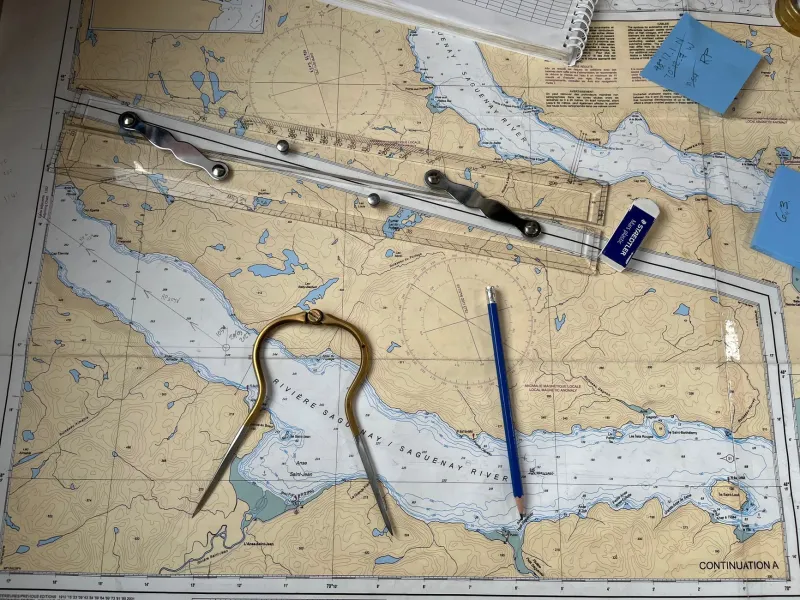
For as long as ships have worked the Clyde, notices to mariners have done unglamorous, indispensable work. They are not speeches. They are short, scheduled, addressed to named audiences and corrected when the picture changes. A chart is only as good as the corrections pinned to it, and the same is true of the chart a team carries in its head when the organisation decides to change course.
Most change programmes do not fail at the strategy stage. They fail in the fortnight between the decision and the explanation, when people are left to assemble their own version of events from overheard remarks and half-finished emails. The discipline below is borrowed from navigational practice, and it is designed to close that gap.
The gap fills itself
Silence is not neutral. When information is withheld — whether for reasons of confidentiality, timing or simple caution — people do not wait patiently for the official word. They build a working theory from the evidence around them: a closed meeting room, an unfamiliar name on a calendar invitation, a manager who has stopped making eye contact.
The theory is rarely accurate, and it is almost always more alarming than the truth. A restructure becomes a closure. A review becomes a redundancy round. By the time the formal announcement arrives, it is competing with a story that has had days to settle.
A notice to mariners accepts this reality. It does not assume the sea will stay quiet until the survey is complete. It marks what is known, flags what is not, and gives a date for the next update.
First, draw the chart: who is actually affected
Before any wording is drafted, produce a map of impact. Do not start from the organisation chart; start from the working week. Ask each team leader a single question: what will your people do differently in the first five days of this change?
The answers usually sort into four groups:
- Those who must act differently immediately. New systems, new reporting lines, new shift patterns, new approval routes. These people need detail, not overview.
- Those who will be asked about it. Front-line staff, account managers, reception teams and anyone in contact with customers or suppliers. They need a short, accurate version they can repeat without improvising.
- Those whose terms, workload or prospects are touched. This includes recognised trade unions and employee representatives, who should hear from the organisation directly rather than through the grapevine.
- Those who will observe from a distance. They still need to know, but a paragraph will do.
One message cannot serve all four. Treating them identically is the most common error in change communication, and it usually produces a document too vague for the first group and too long for the last.
Sequence matters more than speed
There is an old principle worth adopting without modification: nobody should learn of a change to their own working life from someone outside it.
The sequence follows from the map. Directly affected teams and their representatives hear first, in person where possible. Managers who will field questions hear before their teams, and hear enough to answer honestly. Adjacent teams follow. The wider organisation comes next. External audiences — customers, partners, suppliers, and where relevant the press — come last, and never before the people who will have to deliver the change.
Staging is unavoidable in most organisations. What is avoidable is leaving the staging unexplained. If a team is not in the first wave, tell them so and tell them when their turn comes. A dated promise is a form of respect; an open-ended 'more details to follow' is not.
Name what is unknown, and give it an owner
A notice to mariners does not pretend a hazard has been fully surveyed. It marks the position, describes what is understood, and states when the next notice will be issued.
Change briefings should do the same, with three plain columns: what is known, what is not yet known, and what has not yet been decided. The distinction matters, because the first invites patience, the second invites anxiety and the third invites lobbying.
Every entry in the unknown column needs two things attached: a name and a date. 'The impact on the Aberdeen team is being assessed by the operations director, and we will confirm by 27 November' is a sentence that holds. 'Further information will follow in due course' is a sentence that erodes trust every time it is read.
Where something is known but cannot yet be shared — a commercial negotiation, a legal process — say that plainly. Confidentiality is a reason people can accept. Silence presented as ignorance is not.
Keep the chart corrected
A change announcement is an event. A change is a period, and periods need maintenance.
Set a review date at the moment of publication, and say what will happen on it. Keep one canonical source — a single intranet page, briefing note or shared document — and make clear that it supersedes everything else. When something turns out to be wrong, correct it visibly and early. A short, dated correction to a paragraph costs far less than a full retraction three weeks later, precisely because it demonstrates that the organisation is still paying attention.
A short form that works
Most change briefings can be held to a single page, provided the page answers eight questions: what takes effect, and from when; what changes; what does not change; who is affected and how; what is not yet known, who owns it and when it will be settled; where to ask questions; who to contact directly; and when the next update will be issued.
The 'what does not change' line is routinely omitted and consistently valued. It gives people something stable to stand on while the rest moves.
Where these briefings come apart
Three failures recur. The single all-staff email, sent once, which answers none of the questions above. The briefing written for the board and delivered unchanged to the shop floor. And the announcement that promises clarity later without ever scheduling it.
Each is a failure of navigation rather than of intention. The intention is usually sound; the chart is simply out of date by the time anyone reads it.
Trust is a chart kept current
Teams do not expect omniscience from their leaders. They expect to be told what is happening, what is not yet clear, and when they will hear more. A notice to mariners earns its authority not through eloquence but through punctuality and correction.
Organisations facing rough water would do well to borrow the habit: publish early, address it to the people who must act, mark the unknowns honestly, and come back on the date you promised. Do that, and the rumour has far less room to sail.